SBI SHINSEI BANK
Protect Yourself against Fraud
Learn about fraudSpot a spoofProtect yourself

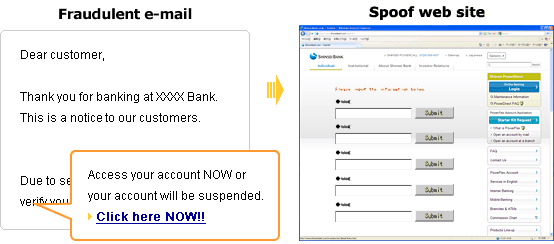
What is a fraud ulent e-mail?

Everyone should know about fraud e-mails (also known as phishing or spoofs) and how one can protect oneself from them. Here is a quick and easy way to learn how to spot them.
When a fraudulent organization goes "phishing," you may receive an e-mail that claims to be from SBI Shinsei Bank asking you to provide sensitive personal information such as your PIN, password, bank account number, etc. To bait you, they generally ask you to click on a link to a spoof web site that may look like ours but is not, where you will be asked to provide personal information.
SBI Shinsei Bank will never send you an e-mail asking you to provide personal information.

What is a spoof web site?

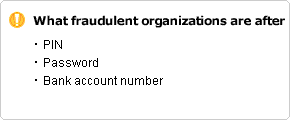
A spoof web site is a fraudulent web site that may look exactly like ours, asking for sensitive personal information. Fraudulent e-mails are usually linked to spoof web sites. They are usually after your PIN, password and your bank account number.
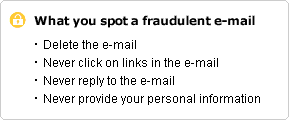
Never click on a link contained in a suspicious e-mail.


Next

How do I report attempted fraud?
In case you suspect or spot a fraudulent e-mail, please contact PowerCall immediately. Do not click on any links in fraudulent e-mails and exit suspected spoof web sites.


Available 24 hours a day, 365 days a year.
For English, please select 2-1-7-ID confirmation-3


Safe Dealings         |         User guidance

Some of our financial products are subject to risk, including possible loss of the principal amount invested. Before purchasing any of our financial products please ensure you carefully read and understand the relevant product description in Japanese. The product description provides details of the risks, fees, and charges etc. that each product entails.